

And here’s the truth: chaos mode isn’t caused by growth itself. It’s caused by strategy mistakes—costly blind spots that keep small and medium businesses stuck in reaction mode instead of leading with intention.
Today, we’re breaking down the 7 most common strategic mistakes that drain resources, confuse teams, and limit scalability—and how to fix them before they cost you your next growth phase:
1. Building without a clear strategic anchor
Many businesses grow reactively. They chase opportunities as they appear—new products, new markets, new partnerships—but without a clear strategic direction tying everything together.
When there’s no unifying vision, every department starts rowing in a different direction. Marketing focuses on awareness, sales on short-term wins, and operations on putting out fires.
The fix: define your strategic anchor.
That’s your long-term “why”—the impact you want to create and the type of company you want to become. Every initiative should connect back to this anchor. If it doesn’t, it’s a distraction.
Ask yourself: Does this move us closer to our strategic north star or just keep us busy?
2. Confusing goals with strategy
A goal is what you want.
A strategy is how you’ll get there.
Too many scaling companies mistake one for the other. “We want to double revenue this year” is not a strategy, it’s an outcome. Without a clear plan linking that outcome to resources, timelines, and market realities, it’s just wishful thinking.
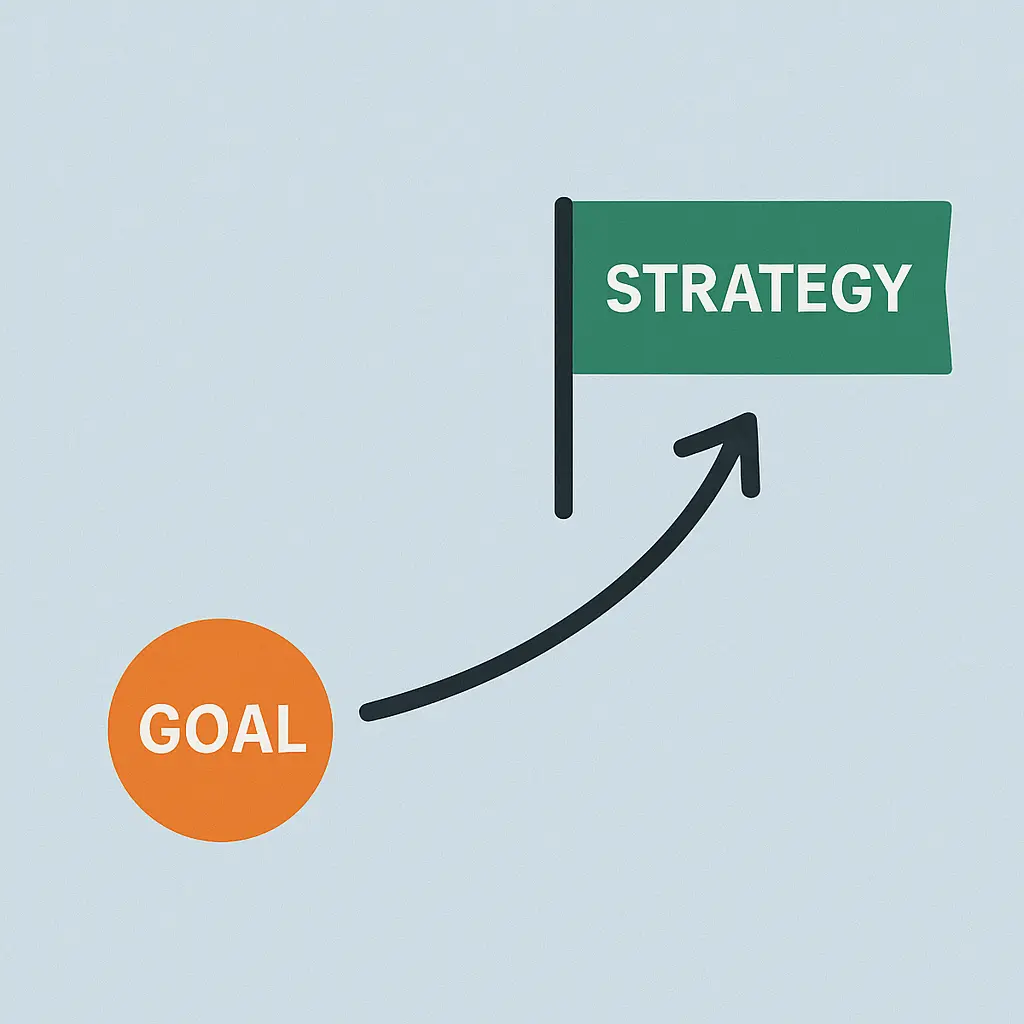
The fix: connect every goal to a strategic pathway—a set of actionable, prioritized initiatives designed to get you there.
For example:
- Goal: Increase revenue by 50%.
- Strategy: Expand into two new B2B verticals while automating client onboarding to reduce churn by 20%.
That’s how you translate ambition into execution.
3. Operating without scalable systems
When growth hits, manual processes break first. What worked when you had 5 employees will collapse when you reach 25.
If your team still relies on spreadsheets, siloed communication, or inconsistent workflows, scaling will feel like pushing a boulder uphill.
The fix: systematize early.
Document key processes—sales pipelines, client delivery, reporting, hiring. Then, automate wherever possible using integrated tools that scale with you.
A scalable system is about freeing people from repetitive work so they can focus on higher-value tasks.
4. Neglecting alignment between teams
Growth magnifies misalignment.
Marketing runs one campaign. Sales pitches another message. Operations deliver something entirely different. The result? Frustrated clients, wasted budgets, and an overworked team.
The fix: create one unified growth playbook.
That means shared KPIs, consistent messaging, and cross-department check-ins. When every team understands how their work supports the same strategic outcomes, execution becomes smoother and results multiply.
5. Ignoring data when making key decisions
Gut instinct is valuable, but it’s not scalable.
When companies rely solely on intuition or “what worked before,” they end up making decisions based on outdated assumptions. Markets evolve. Customer expectations shift. And what felt right last year might be completely wrong today.
The fix: build a data-driven culture.
Track the right metrics: customer acquisition cost, churn rate, conversion rates, lifetime value, and ROI per channel. But don’t just collect data—translate it into insights and actions.
Every strategic meeting should include one simple question: What does the data tell us?
6. Hiring reactively instead of strategically
Most businesses hire when it’s already too late—when everyone’s overloaded and burnout is spreading. But reactive hiring often leads to mismatched roles, unclear expectations, and expensive turnover.
The fix: plan your org chart for the business you’re becoming, not the one you are today.
Look 12–18 months ahead and map the capabilities you’ll need at each growth stage. Then build a hiring roadmap that matches your strategy, not your current pain points.
Smart hiring is proactive—it anticipates growth instead of scrambling to survive it.
7. Treating strategy as a one-time project
Too many companies create an impressive strategy deck once a year, present it, and then never revisit it. But the business landscape changes monthly. Competitors adapt. Markets shift. Technology evolves.
The fix: treat strategy as an operating rhythm.
Review it quarterly. Reassess assumptions. Measure performance against goals. Adjust direction as needed.
Strategic agility—the ability to adapt without losing focus—is what separates companies that thrive from those that plateau.
Growth doesn’t have to feel like chaos
When you anchor every decision to a clear strategy, align teams under shared goals, and build systems that scale, growth becomes intentional, not accidental.
The question isn’t how fast can we grow? but how intelligently can we scale?
If your business is growing fast but feels stuck in “chaos mode,” we can help you bring order to growth—without slowing it down.